

Europe’s deeptech sector has never been worth more, nor attracted a larger share of venture capital. But breakthrough science grows on a slower clock than software, and too much of the value is still harvested elsewhere. The question for the next decade is not whether Europe can grow deeptech companies. It is whether enough investors are willing to be growers rather than harvesters.
A rescue that crossed the Atlantic
In the second half of the nineteenth century, a tiny aphid called phylloxera spread through Europe’s vineyards and destroyed a large part of them. Some of the continent’s most famous wine regions faced ruin. The rescue came from an unexpected direction. Growers grafted their European vines onto resistant American rootstock, and the combination survived. Much of the wine Europe is proud of today still grows on roots that came from somewhere else.
It is a useful story to keep in mind when looking at European deeptech, because the sector faces a version of the same question. Europe has the vines. Where will the roots, and the patience, come from?
Two different clocks
Levi Hogerhorst, Investment Analyst at Kylla Corporate Transactions, works with founders developing new materials, computing and energy technologies, and with the investors who assess them. What strikes him most is that the two sides often run on different clocks.
“Many investors still measure progress the way software taught them to: in quarters, in monthly growth, in the next round,” he says. “A deeptech founder is thinking about the pilot line, the certification, the first industrial customer. That is years, not quarters. Most of the friction I see in deeptech fundraising comes from that mismatch, not from the science.”
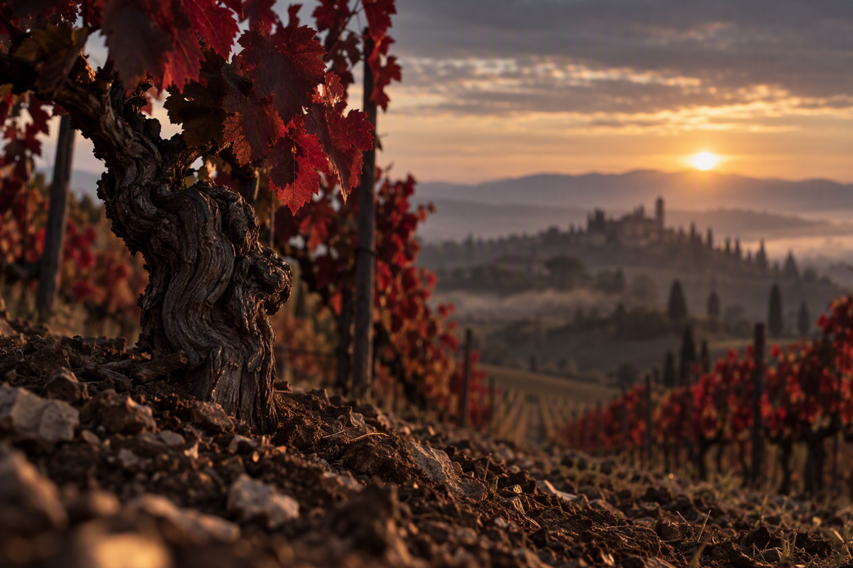
Viticulture has always lived with that tension. A newly planted vine typically needs around three years before it yields grapes worth turning into wine, and the best vineyards are planted by people who think in decades. Deeptech is similar. Before a new circuit-board material, quantum processor or fusion component earns its first revenue, it has to survive years of research, testing and regulation. Most of the value is built below ground, where nobody can see it yet.
A record season
The encouraging news is that the vineyard has never been larger. According to the 2026 European Deep Tech Report by Dealroom, Lakestar and Walden Catalyst, Europe’s venture-backed deeptech companies are now worth a combined $690 billion. Investment reached a record $20.3 billion in 2025, and deeptech now takes 32% of all European venture capital, more than double its 15% share in 2015.
The sector has also held up better than technology as a whole. While regular tech funding remains well below its 2021 peak, deeptech is almost back to it. Part of the reason is geopolitics: semiconductors, AI infrastructure, energy, space and defence have become questions of sovereignty, and Europe increasingly wants to own the technologies it relies on.
The soil is rich. Europe is home to around 30% of the world’s leading deeptech universities, produces twice as many science and engineering graduates as the United States, and since 2015 about a third of its deeptech start-ups have come out of research institutions.
Who bottles the wine?
The weak point lies later in the season. The same report finds that European deeptech companies raise smaller rounds and scale more slowly than their US peers, that a significant share of late-stage capital comes from outside Europe, and that more than 80% of exits happen through acquisitions, with much of the value captured by American buyers. Europe grows the grapes; too often, someone else bottles the wine.
Brussels has responded. The Scaleup Europe Fund, backed by the European Commission alongside institutional investors such as Allianz, APG on behalf of Dutch pension fund ABP and Novo Holdings, and managed by EQT, targets €5 billion for technology companies from Series B to pre-IPO. Its final legal steps were completed in August 2026.
A large growth fund matters. But it arrives once the vines are established. The harder stretch comes before that: the early, uncertain years when a company needs its first serious investors, and those investors need to understand what they are actually backing.
Growers, not harvesters
The vineyard offers a simple distinction. Harvesters arrive when the fruit is ripe. Growers are there when the vine is planted, tend it through difficult years and accept that their reward comes later.
Deeptech needs more growers, and they are rarely one type of investor. Specialist venture funds bring technical understanding. Family offices bring long horizons and flexibility. Strategic corporates bring first customers and industrial know-how. Public co-investors such as the European Innovation Council help absorb early risk. The strongest rounds tend to combine several of them.
Like the grafted vine, those combinations usually cross borders. “In almost every deeptech file I work on, the company, its first industrial customer and its most natural investors sit in different countries,” says Hogerhorst. “The science may be local. The capital almost never is.” The European Innovation Council sees the same pattern: around 80% of its fund’s deals are cross-border, while only about 1% of the companies it backs relocate outside Europe.
That is the ground Kylla works on. With 15 key people across nine countries and a further 40 professionals in more than 30 countries, the firm connects companies with investors beyond their home market, and is increasingly active in deeptech, from advanced materials and computing to energy technology. Where an opportunity meets its criteria, Kylla can also invest alongside the investors it brings in.
Roots from elsewhere
Europe’s vineyards survived because growers were willing to look beyond their own borders for the roots they needed. European deeptech may need the same open mind: patient capital, assembled across countries and committed for more than one season.
The vines are in the ground. What matters now is who stays for the harvest.
By: Levi Hogerhorst
Investment Analyst
Kylla Corporate Transactions
13-11-2026
Sources
- The 2026 European Deep Tech Report – Dealroom, Lakestar and Walden Catalyst (March 2026)
- European Innovation Council – EIC Impact Report 2026 (June 2026)
- European Commission – Scaleup Europe Fund (EIC Fund page and press release of 4 August 2026); EQT – Scaleup Europe Fund