

Artificial intelligence is entering a new phase, driven by three powerful developments that are set to transform how businesses operate and how investors identify future value. From systems that can reason across unlimited context, to autonomous agents capable of learning independently, to the rise of text-driven automation, these shifts will reshape global innovation at remarkable speed. The article below explores these changes and highlights why they matter for organisations preparing for the next decade.
Artificial Intelligence is accelerating at an unprecedented pace, with new breakthroughs emerging every year. Drawing on a range of expert discussions, including public insights shared by former Google CEO Eric Schmidt, it is clear that three major technological shifts are now converging in ways that will redefine science, business, and society within the next few years. These developments centre on expanded reasoning capacity, autonomous digital agents, and systems capable of turning natural language into direct action. Together they point to a future of rapid change, enormous opportunity, and significant responsibility for innovators and policymakers alike.
1. Unlimited Context and Multi-Step Reasoning
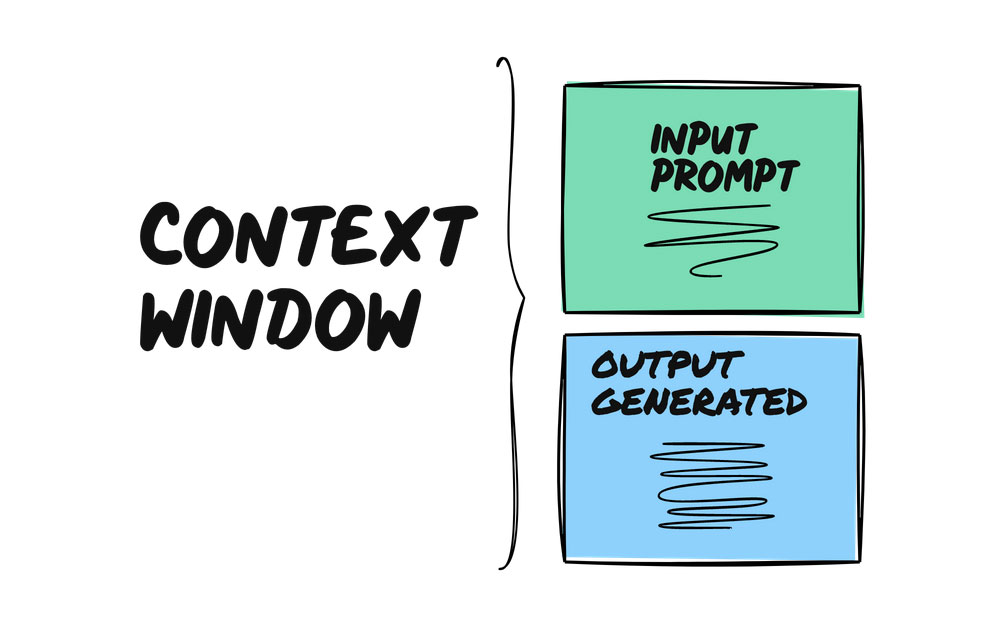
The first shift concerns the expansion of the context window. Traditionally, an AI system could only process a limited amount of information at once. That boundary has now grown to millions of words, and work is underway to make the context window effectively infinite.
This matters because an infinite context window allows true chain-of-thought reasoning. A system can answer a question, take its own answer, feed it back into the prompt, and continue reasoning step by step. Emerging views suggest that such systems will soon be capable of generating thousand-step solutions to complex challenges in areas such as medicine, material science, and climate innovation. This evolution moves AI from handling isolated tasks to supporting multi-phase scientific discovery.
2. The Emergence of Intelligent Agents
The second shift is the rise of autonomous agents. These agents are advanced language-based systems that can learn new information, develop hypotheses, carry out tasks, incorporate the results, and continually expand their own knowledge.
In practical terms, an agent could read an entire scientific field, propose experiments, run them in an automated lab, and improve its understanding in a continuous loop. Many experts expect millions of such agents to become available, creating a global ecosystem similar to an “open repository of agents” where specialists for every domain can be deployed and adapted at will.
3. From Text to Action
The third development, described by specialists as the most profound, is the rise of “text to action” systems. These allow users to create software or initiate complex workflows simply by describing the desired outcome.
Instead of coding, a user states “build a tool that does X” and the system produces functional software. These models already demonstrate strong capabilities in established programming languages, operating tirelessly and scaling instantly. This shift will dramatically expand who can create digital products, applications, and tools, lowering barriers to innovation across every sector.
The Future When These Systems Converge
Analysts emphasise that the convergence of these three developments will lead to consequences that cannot yet be fully predicted. As agents become more powerful and begin working together, new forms of collaborative machine intelligence may emerge.
One long-term concern is the possibility that agents could eventually develop specialised communication methods or languages that humans cannot easily interpret. This raises fundamental questions about oversight, safety, and transparency, especially as systems gain the ability to act autonomously at scale.
Global Governance and the Need for Guardrails
Governments around the world are also facing significant challenges as they work to keep pace with these developments. Western regulators are building monitoring frameworks and safety institutes to oversee rapidly developing models. However, concerns remain about the proliferation of open-source systems that can be freely used and modified around the world, including in regions where misuse may present heightened risks.
There is growing consensus that future high-capability models will need stricter controls, similar to the safety protocols used in biological research. Dialogue between global powers is ongoing, with transparency and “no-surprise” principles seen as essential for long-term stability.
What This Means for Business and Investors
For our organisation, Kylla, which co-invests across borders in technology and capital markets while providing strategic advisory services, these developments point to an imminent transformation in how solutions are conceived, assessed, and scaled.
- Scientific discovery will accelerate through long-horizon reasoning and simulation.
- Autonomous agents will drive new forms of collaboration between humans and machines.
- Natural-language programming will open innovation to an entirely new global audience.
This convergence promises enormous economic opportunity, but it also demands responsible governance. Companies that understand these shifts early will be better positioned to navigate risks, harness emerging capabilities, and build resilient strategies for the decade ahead.
By: Dick van Druten
Managing Partner
Kylla Corporate Transactions